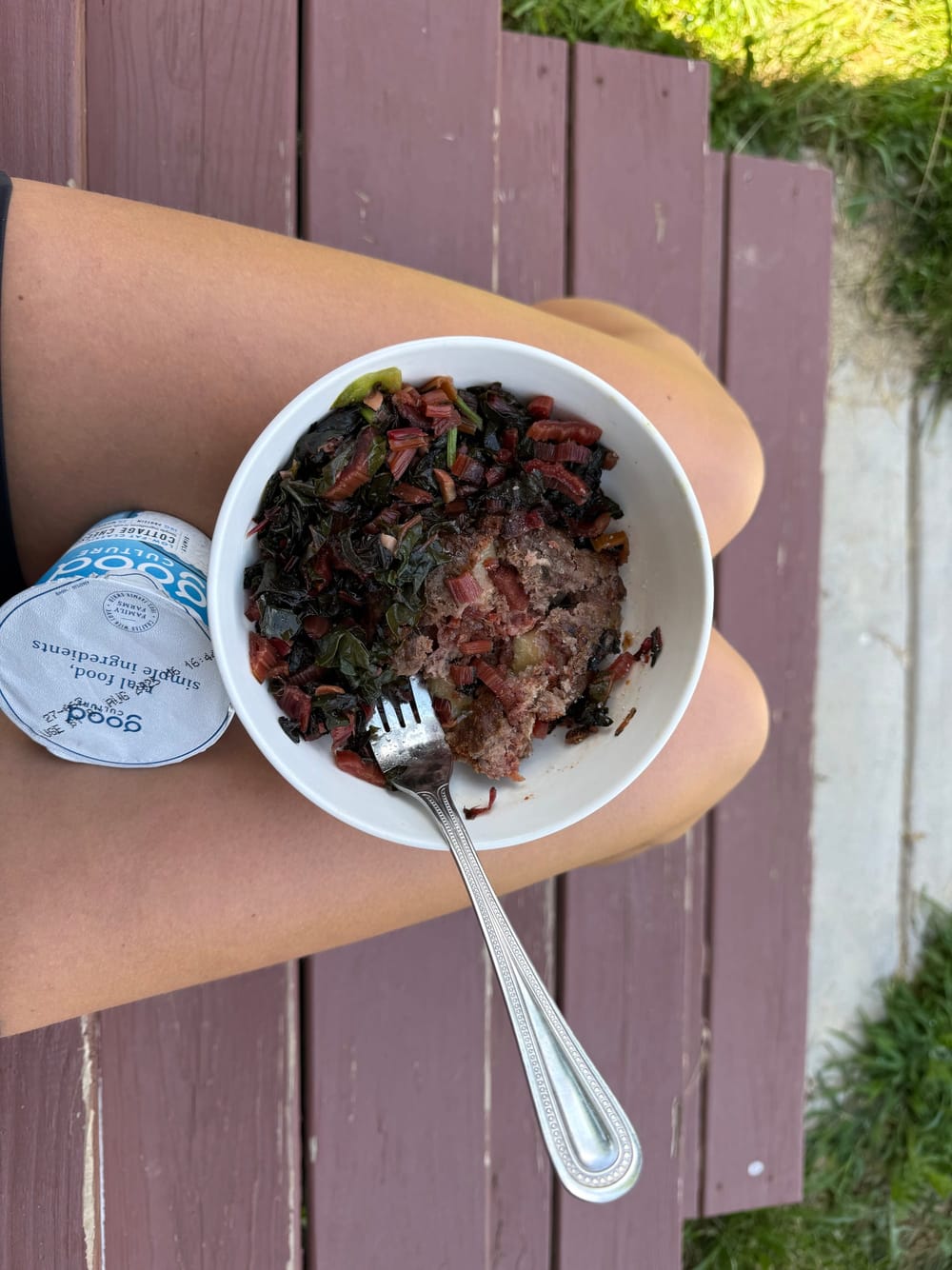
I frequently recommend patients target an intake of 100 g protein per day, minimum. It's an easy number to remember, and can be broken up into 40/30/30 or 30/30/40 grams per meal, if you're eating 3 meals a day. Learning to understand what 30 grams of protein looks like is a skill that takes time to develop. Prioritizing protein intake improves your body composition - what you're built of - which means your lean muscle mass increases over time, you're less hungry, and your body is better able to handle carbohydrates when you eat enough protein at each meal. Win-win-win!
Eventually, I do recommend patients increase protein intake closer to 1 gram per pound per day. This is a good level to target if you're trying to increase your muscle mass or maintain muscle mass while losing fat. Most human beings in America fall into these categories.
Ask ChatGPT or your favorite AI to generate some meal ideas for you to hit your protein goals. Tell it what kinds of protein you do (and don't) like to eat!
BREAKFAST
- 3 large eggs: ~18 g protein
- 1 cup Greek yogurt (plain, nonfat): ~20 g protein
- If you want to tune to ~30 g, you could do either:
- 4 egg whites + 1 whole egg: ~14 g + 6 g = ~20 g (not enough), so add
- 1 scoop whey protein mixed in water: ~20–25 g (optional)
LUNCH
- Grilled chicken breast, 5 oz (≈140 g cooked): ~40 g protein
- 4 oz (113 g) chicken breast + 1/2 cup cooked lentils: ~35 g + ~9 g = ~44 g (too high)
- 3 oz (85 g) turkey breast + 1/2 cup quinoa: ~25 g + ~4 g = ~29 g
- 4 oz (113 g) salmon: ~23 g + 1/2 cup edamame: ~8 g → ~31 g
- Or, if you want closer to 30 g:
- 4 oz chicken breast (≈110 g cooked): ~35 g
- Add a small protein-rich side if needed (e.g., 1/2 cup cooked beans ~7 g, adjust)
DINNER
- 6 oz (170 g) lean steak or salmon: ~40 g (steak ~42 g, salmon ~34 g depending on cut)
- 1 cup cottage cheese (28 g protein) + add something small (e.g., 1 scoop casein protein)
- 6 oz chicken thigh (bone-in has more fat, cooked white meat ~35 g)
- 6 oz grilled chicken breast: ~40 g
- 1 cup Greek yogurt + 1 oz cheese: not typical for dinner, but around 40 g combined
I love to keep cottage cheese on hand. If you're weirded out by the texture, give it a try - you might be surprised. Different brands really offer a different flavor profile because it's a fermented food. I love Good Culture, but I recommend any organic version. Try adding salt, a tablespoon of jam or jelly, or a touch of honey to make it like dessert.
A note on portions:
you NEED to use a food scale at some point to really understand what a portion looks like. We tend to over estimate our consumption of healthy foods, and under-estimate our consumption of not-so-healthy foods. The scale helps keep you honest, especially if your progress doesn't reflect what foods you say you've been eating.
A note on progress:
it takes about 3 months of CONSISTENT quality intake to see a change in your body composition. Taking photos weekly, weighing yourself daily, and tracking body composition using something like the InBody scale or DEXA scans can be really helpful to see progress even when you feel like you're stuck. Be aware, too, that your weight can fluctuate 10% every day just from water balance.
Member discussion: